Vampires

Tezuka’s VAMPIRES (or VAMPIRE) manga (written 1966-67 and 1968-69) marked a major turning point in Tezuka’s work, at which he began to pay more attention to the darker side of the human psyche, characterized by darker, less heroic protagonists and more complicated villains. Most of Tezuka’s most interesting dramatic works, everything from morally questionable protagonists like Black Jack or the Rainbow Parakeet, to the horrific drama of Alabaster or Ayako, can be said in to be enabled by this change. Vampires marked an especially important stage in the progess of Rock Holmes, one of Tezuka’s longest-running characters, who appeared here for the first time in a charismatic villain role as Makube Rokuro. Vampires is certainly not as mature a work as some of Tezuka’s later social commentaries, but a story of the fight for the right to do evil is certainly a far cry from Astro Boy’s quest to bring about friendship between humans and robots.

A TV series based on the manga was made in 1969. It was largely a live-action series, but the animal versions of the vampires were animated. Tezuka is on record as having been dissatisfied with it.

Tezuka World Vampire pages:
Vampire part one – the Vampire section
Vampire part two – the Ueko section.
Vampire TV series – live-action and animation hybrid.

Neither the original Vampires manga nor the TV series, a black-and-white live-action/animation hybrid, have been translated into English, but the TV series aired in Italy, and the complete manga is available in French (see our page on Tezuka in Translation for ordering instructions). This page provides a very detailed introduction to the themes and characters of the story, revealing many specifics about the true nature and development of the central characters, far more than you will find on the summary pages for series available in English. It does not, however, outline specific plot points past the beginning. Eventually, a separate page with a complete story summary will be linked below. If you can read French and would prefer to approach this work unspoiled, you should not read further.

The Vampires manga consists of two sections, one original section, the Vampire section, written and published 1966-67, and the second, the Ueko section, published in 1968-69. The Ueko section, is a largely separate story, consisting of several sub-sections set at different points in time and exploring the development of the relationship between the Ueko transforming creatures and Makube (Rock) over several reincarnations. The Ueko section was never finished, but its network of interconnected stories sheds much light, both on the first section, and on elements of other Tezuka works, particularly the second volume of Phoenix: Future.

This page will treat the Vampire section first, then the Ueko section.

WHAT ARE THE VAMPIRES?

When approaching Vampires, many readers are confused by the fact that it seems to be about werewolves. The story begins in a village of vampires who are destroying their homes setting out into the world because humans are moving into their valley, but these "vampires" do not drink blood, nor are they immortal. Instead they all transform into animals, ranging from wolves and bats to snakes and crocodiles, the transformations being triggered by different stimuli for each vampire. For example, the main vampire, Toppei, turns into a wolf when he sees the moon or when he is scared. His little brother Chippei transforms whenever he sees anything round. Others transform at the smell of onions, the sight of a telephone pole, or a variety of other stimuli. Why, then, does Tezuka call them vampires?

The answer comes in the research on Vampires conducted by in the story. Long ago, he says, before society developed, man was just another savage animal, fighting, killing and eating his fellow men freely in a chaotic, Hobbesean war of all against all. Then, with the advent of civilization, man developed a conscience, morals and laws to restrain him, while the beasts remained savage. The vampires are special creatures who, while human, have remained beasts, free from the constraints of society and conscience, a semi-human status symbolized by their animal transformations. They are vampires, then, because they can prey upon men, not drinking blood specifically but regarding humans as potential prey, just as animals do.

In the course of the story, the vampires, spread all throughout the world, work toward a revolution in which they will overthrow human society and let men live as beasts again, freeing them from moral constraints so they can all be free to do evil, as the vampires are, and so the vampires will be free at last to express themselves. Human society turns out to be filled with vampires who have been concealing their bestial nature for many generations, and are desperate for a chance to express themselves at last. It is the story of this revolution, and of the few humans and werewolves who oppose it, which is the focus of the Vampire section of Vampires.

MAJOR CHARACTERS:

Toppei:

The effective protagonist of the Vampire section is Toppei, a young vampire who refuses to go along with the rest of his village at its dissolution and instead flees to Tokyo, where he wants to live as a manga artist, and seeks employment working for Osamu Tezuka. Toppei is a werewolf, transforming into wolf form whenever he sees the moon, or when he is frightened for his life, and he has trouble concealing his wolf form. When in wolf form, Toppei cannot control his actions, and if frightened fights and even kills humans. Initially his transformation is witnessed by Osamu Tezuka, who, though frightened, becomes his ally and protector. Throught the story Toppei is torn between wanting to help his people and being appauled at their plan, and ultimately chooses to ally with the humans against his own kind, with Tezuka as his primary ally. Unfortunately, the second human to witness Toppei’s transformations is the charismatic young evil genius Makube Rokuro aka Rock, who determines to blackmail Toppei and Tezuka into helping him with his evil schemes. Toppei resists, but as he and Rock are fighting he falls into a pit and Rock rescues him. According to vampire tradition, a vampire must obey the man who saves his life, so Toppei reluctantly carries out Rock’s orders for a little while. Eventually Rock’s evil demands become too much and the human Toppei refuses to help any longer, but in wolf form he continues to obey Rock, though whether this obedience comes out of habit or because Rock has a special power over the vampires is unclear.

Osamu Tezuka:

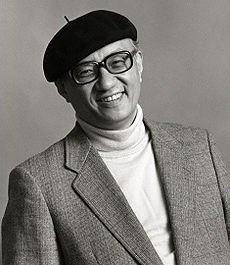
While Tezuka had made brief appearances in his own works since Saiyuki (1952-59), Vampires was the first time he served as a constant character, rather than a cameo. Here Osamu Tezuka is himself, a famous manga author and animator working at a studio in Tokyo. Indeed, Tezuka is consistant in treating his own fame in this story, both in silly and serious ways, ranging from his using his publishing and television contacts to help fight the revolution, to the comic moment when, upon being captured by a terrifying bat-vampire, he introduces himself, and the vampire says, "Oh, you’re Osamu Tezuka? My son loves your manga. Too bad I have to eat you now." Humor aside, this is a very dark story, and Tezuka allows himself to suffer a surprising range of trials, from blackmail and imprisonment to direct attack. Indeed, as times become desparate, Tezuka himself winds up performing wicked acts including blackmail, and draws himself with wicked sneers and other expressions usually reserved for strict villains like Lamp and Skunk. Throughout, though, Tezuka continues to exploit the paradox of author-as-character. When the character Tezuka makes certain declarations, such as refusing to believe it when he is told that Rock is dead, or insisting that Rock must be a vampire despite the lack of evidence, the reader cannot tell whether this is the character guessing, the author knowing, or perhaps something in between, the author knowing his own character well enough to make these predictions even when he doesn’t know for certain. That Tezuka himself who is instrumental in ultimate, and extremely morally questionable, method the humans use to fight back gives the author an extra level of personal responsibility for the end forced upon the characters. In the live-action TV series, Tezuka played this part himself.

Makube Rokuro:

Rock, originally Rock Holmes in Detective Boy Rock Holmes (1949) is one of Tezuka’s oldest characters, and appears in an enormous variety of parts in many different works throughout Tezuka’s career. From the beginning, the young Rock had been different from Kenichi and other standard Tezuka heroes because he was more sensitive to dark influences, capable of transforming and turning dark over the course of his suffering, and aware of the fact that the evil solution is not necessarily the worst. Until this point, however, he had never actually chosen evil. The name Makube comes from Macbeth, and Rokuro is Rock + kuro (black), so Dark Rock, a persona he has here for the first time here, but will repeat in later stories, including Black Jack. Through most of this book, though, Makube goes by the nickname Rock. This is also the first time Rock was reliably drawn with the dark sunglasses which will be characteristic of his later, darker incarnations. Here in Vampire, Rock is wicked from the very beginning, a young criminal genius who has smarmed his way into the hearts of a wealthy family in order to murder them and take their fortune. He is also a master of disguise, transforming himself into old men, women, children, even other characters to perpetuate elaborate deceptions. Like his namesake, Rock visits the three weird sisters, fortune-tellers in a shady part of the city, who prophecy that he will become king of the world, and that neither animal nor man can kill him, a prophecy which leads to absolute confidence in his quest for power. When presented with Toppei’s transforming ability, he instantly revises his schemes to exploit this new resource. The leader of the revolutionary vampires, upon seeing Rock, immediately finds herself drawn to him, and concludes that he must be a vampire, but that he doesn’t know it because he has never found the trigger for his transformation. The vampires kidnap Rock and expose him to various stimuli, trying to find his trigger. They do not succeed in making Rock transform, but Rock immediately wins the vampires’ trust and becomes the leader of their revolution, devoting his ill-gotten fortune and his strange castle full of traps and illusions to the project of overthrowing human society and bringing about a new, free, animal world where he will be king.

IS MAKUBE A VAMPIRE?

Since the work is left unfinished, the answer is never revealed. Since Rock’s behavior is perfectly amoral and self-serving, like the wild animal behavior the vampires, and since the vampires have an instinctive, if not supernatural, tendency to obey him, it is easy to believe that Rock may be, as the character Tezuka believes, some special sort of vampire, but what sort is never made overtly clear. One theory is that Rock may, perhaps, be a vampire who transforms into the human animal, a human as humans were before society developed, without morality or conscience. This would explain why Rock never undergoes an apparent physical transformation, and also why he at strange points he suddenly suffers from attacks of conscience, unable to kill when he has already killed easily – at these points he has, perhaps, turned back into a civilized human, without the reader, or Rock, being able to tell. Another theory is that Rock is a more sophisticated kind of vampire, transforming himself through human arts of lies and technology, more advanced compared to the bestial transformations of the common vampires, just as man is more advanced than animal. Either way, some supernatural element seems necessary to explain how Rock survives certain death as he does, and his strange confidence that he will return even if defeated. It is not wise, however, to draw too man conclusions about Makube’s true nature from the Vampire section alone, since he will be a major focus of the later Ueko section.

WHAT ARE THE UEKO?

Where a vampire is a human who can become a beast, the Ueko is the opposite, an animal which can become human. The Ueko is a kind of strange cat – the story first shows them in China, but they have apparently lived all over the world, and are on the verge of extinction. The Ueko has the strange power to change its shape, transforming into any human it sees, and even mimicking human speech. Unlike the vampires, the Ueko do feed on blood, human or animal. They are not naturally aggressive and use their mimicking ability only as a survival mechanism to evade predators by pretending to be one of them, but they are willing to kill when appropriate, and their abilities, like those of the Vampire, are ideal for exploitation by an evil mastermind like Makube Rokuro.

STRUCTURE OF THE UEKO SECTION

While the Vampire section is one continuous story, the Ueko section consists of several different stories set in different time periods. More than half are set in the modern day, chronologically immediately after the first section, and with the same characters. Other sections, though, are set long before, in samurai times, and show earlier encounters between humans and Ueko, and particularly between Rock and Ueko. In these sections it becomes clear that the Ueko are responsible for the traditional Japanese legends of female cat-demons. The repeated encounters between Rock and Ueko, and their inevitable adversarial relationship in multiple different reincarnations, makes clear that Rock has a special relationship with transforming creatures, not only as Makube but in many lives, and lead naturally to comparisons to Rock’s relationships with transforming creatures in other series, particularly with the moopies in the Future chapter of Phoenix. These repeated encounters over multiple incarnations also go some way to explaining Rock’s strange confidence in places, particularly when he prophecies his own return in the face of what seems to be certain death; he will return to try again, even after death.

CLASH OF SPECIES:

In the modern day sections, Makube Rokuro is approached by a man who was studying the Ueko and who hopes that, because Rock had a special affinity with the vampires, he will have a similar capacity to command the Ueko, which, indeed, he does, using command, and also what some sort of hypnosis using his eyes. Rock, as one would expect, plots to use the few surviving Ueko for criminal advancement, as he did with the Vampires, capturing and taming one and training it to be his assassin and doppleganger. Upon first contact, Rock’s Ueko takes on his form, reminding us of the clay people from Adventures of Rock who did the same, and there follow chilling sequences of Rock torturing a beast of his own likeness as part of training it to behave like a man, "I will create a human out of you". The Ueko, meanwhile, are concerned only with saving themselves and preserving their species in the face of extinction. In this, Vampires is one of many Tezuka works treating the question of whether two separate intelligent races can coexist, taking its place alongside stories including Nextworld, Adventures of Rock, Astro Boy, Zero Men, Phoenix: Space and others. What makes this case unique is that in no other case have the two races been quite so similar, the Ueko literally becoming human as they transform. In addition, the presence of the sinister Rock intentionally exploiting differentiates this from other stories where human/alien relations tend to degenerate into war without any primary villain. For more on Rock's evolution into villainy, see the Alabaster page and our analytical essay, Rock Holmes: Transformation.

CONCLUSIONS

One possible interpretation of Rock’s power over the Vampires and Ueko is that he is a king, as the weird sisters said, but king of transforming things, an interesting possibility when you consider Tezuka’s focus on the earth as constantly transforming. Another possibility is that he is simple some third sort of strange creature whose nature was not fully explored by the end of the book. Unfortunately the work remains unfinished, so we do not know whether Rock succeeds this time in using his transforming minions to become king as prophesied by the weird sisters, or whether he is defeated, as he is in so many other incarnations in this and other stories. We also do not know whether the two races, humans and Ueko, end up coexisting, destroying one another, or separating, all possibilities played out in other Tezuka series. Whichever the case, Tezuka’s new focus on the charisma of evil will continue throughout his remaining work, and Makube, or rather Dark Rock, will appear in many more stories, carrying with him the central issue of Vampires, the freedom to do evil.

SECONDARY CAST:

In addition to Rock, Vampires contains a number of other recurring Tezuka characters, including Dr. Frankenstein, the mystical mad scientist, Shinsaku Ban the unshakable detective, and Police Inspector Geta. The fact that the series requires BOTH of Tezuka's stock great detectives, one to replace the other when he falls, is a good indicator of the level of complexity of Rock's plot.